
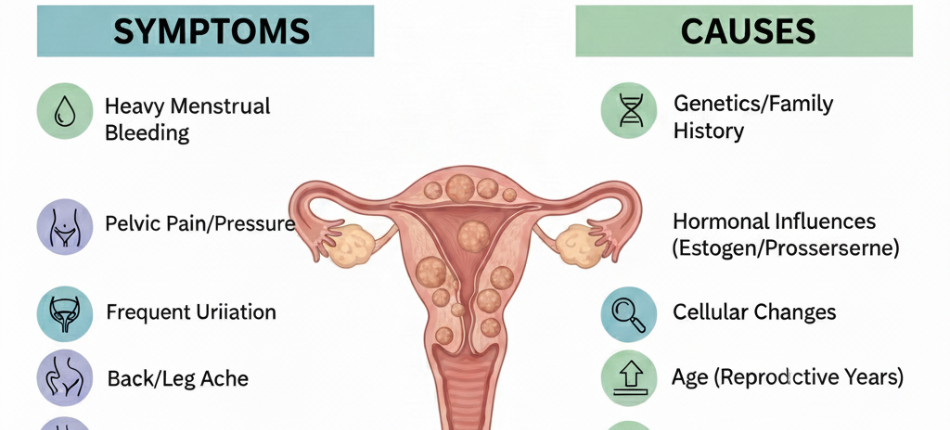
Uterine Fibroids Symptoms and Causes – Dr. Sachin Dalal
Introduction
Uterine fibroids, also known as leiomyomas or myomas, are non-cancerous growths that develop in or around the uterus. They are one of the most common gynecological conditions affecting women of reproductive age. While many women with uterine fibroids experience no symptoms, others may face significant discomfort that impacts daily life, fertility, and overall well-being.
Learn about uterine fibroids symptoms and causes, including heavy bleeding, pelvic pain, hormonal imbalance, and risk factors affecting women.
What Are Uterine Fibroids?
Uterine fibroids are benign tumors made of smooth muscle cells and fibrous connective tissue. They can vary greatly in size—from as small as a seed to as large as a melon—and may appear as a single fibroid or multiple growths.
Fibroids are classified based on their location:
- Intramural fibroids – grow within the uterine wall
- Submucosal fibroids – develop beneath the uterine lining
- Sub serosal fibroids – grow on the outer surface of the uterus
- Pedunculated fibroids – attached to the uterus by a stalk
Common Symptoms of Uterine Fibroids
Many women have fibroids without symptoms. However, when symptoms occur, they may include:
1. Heavy or Prolonged Menstrual Bleeding
One of the most common uterine fibroids symptoms is menorrhagia, or heavy menstrual bleeding. This may include:
- Periods lasting longer than 7 days
- Passing large blood clots
- Needing to change sanitary products frequently
Prolonged heavy bleeding can lead to iron-deficiency anemia, causing fatigue and weakness.
2. Frequent Urination or Bladder Issues
When fibroids press against the bladder, they may result in:
- Frequent urge to urinate
- Difficulty emptying the bladder completely
- In rare cases, urinary retention
3. Constipation and Bowel Problems
Fibroids located near the rectum can interfere with bowel movements, leading to:
- Constipation
- Bloating
- Rectal pressure
4. Pelvic Pain and Pressure
Fibroids can create a feeling of pressure or fullness in the lower abdomen. Larger fibroids may cause:
-
- Chronic pelvic pain
- Lower back pain
- Pain during intercourse
5. Reproductive and Fertility Problems
Depending on size and location, uterine fibroids may contribute to:
-
-
- Difficulty conceiving
- Recurrent miscarriages
- Pregnancy complications
- Labor and delivery issues
-
What Causes Uterine Fibroids?
Uterine fibroids develop due to a combination of hormonal, genetic, and lifestyle factors. Although the exact cause is not always clear, medical research has identified several key contributors.
1. Hormonal Imbalance (Estrogen and Progesterone)
Hormones play a major role in fibroid development. Fibroids tend to grow during reproductive years when estrogen and progesterone levels are high. These hormones stimulate the uterine lining during each menstrual cycle and promote fibroid growth.
Fibroids often:
- Grow during pregnancy
- Shrink after menopause due to reduced hormone levels
2. Genetic Factors
Family history significantly increases the risk of uterine fibroids. If your mother or sister has fibroids, you are more likely to develop them. Certain genetic mutations have also been found in fibroid tissue, suggesting a hereditary link.
3. Age and Reproductive Factors
Fibroids are most common in women aged 30 to 50 years. Early onset of menstruation (before age 10) may also increase risk due to longer lifetime estrogen exposure.
4. Lifestyle and Environmental Factors
Several lifestyle factors may contribute to fibroid development:
- Obesity: Fat cells produce estrogen, increasing hormone levels
- Poor diet: High consumption of red meat and low intake of fruits and vegetables
- Vitamin D deficiency: Linked to increased fibroid risk
- High stress levels: May influence hormonal balance
5. Ethnicity and Race
Studies show that uterine fibroids are more common and severe in women of African descent. They tend to develop fibroids at a younger age and experience faster growth and more symptoms.
6. Pregnancy and Childbirth History
Women who have never been pregnant may have a higher risk of fibroids. Pregnancy appears to have a protective effect due to hormonal changes and uterine remodeling.
When Should You See a Doctor?
You should consult a healthcare provider if you experience:
- Excessive menstrual bleeding affecting daily life
- Severe pelvic pain
- Sudden worsening of symptoms
- Difficulty conceiving
- Rapidly growing abdominal mass
Early diagnosis allows for more treatment options and better outcomes.
Can Uterine Fibroids Be Prevented?
While fibroids cannot always be prevented, risk can be reduced by:
- Maintaining a healthy weight
- Eating a balanced diet rich in fruits and vegetables
- Managing stress
- Getting adequate vitamin D
- Regular gynecological checkups
Diagnosis of Uterine Fibroids
Doctors may diagnose fibroids through:
- Pelvic examination
- Ultrasound imaging
- MRI scans
- Hysteroscopy or laparoscopy (in specific cases)
Conclusion
Uterine fibroids are a common gynecological condition that can affect women in different ways. Understanding the symptoms of uterine fibroids helps in recognizing warning signs early and seeking timely medical care.
The causes of uterine fibroids are multifactorial, involving hormonal imbalances—particularly estrogen and progesterone—genetic predisposition, age, lifestyle factors, and overall reproductive health.
Uterine Fibroids Symptoms and Causes Uterine Fibroids Symptoms and Causes Uterine Fibroids Symptoms and Causes Uterine Fibroids Symptoms and Causes Uterine Fibroids Symptoms and Causes Uterine Fibroids Symptoms and Causes Uterine Fibroids Symptoms and Causes Uterine Fibroids Symptoms and Causes