
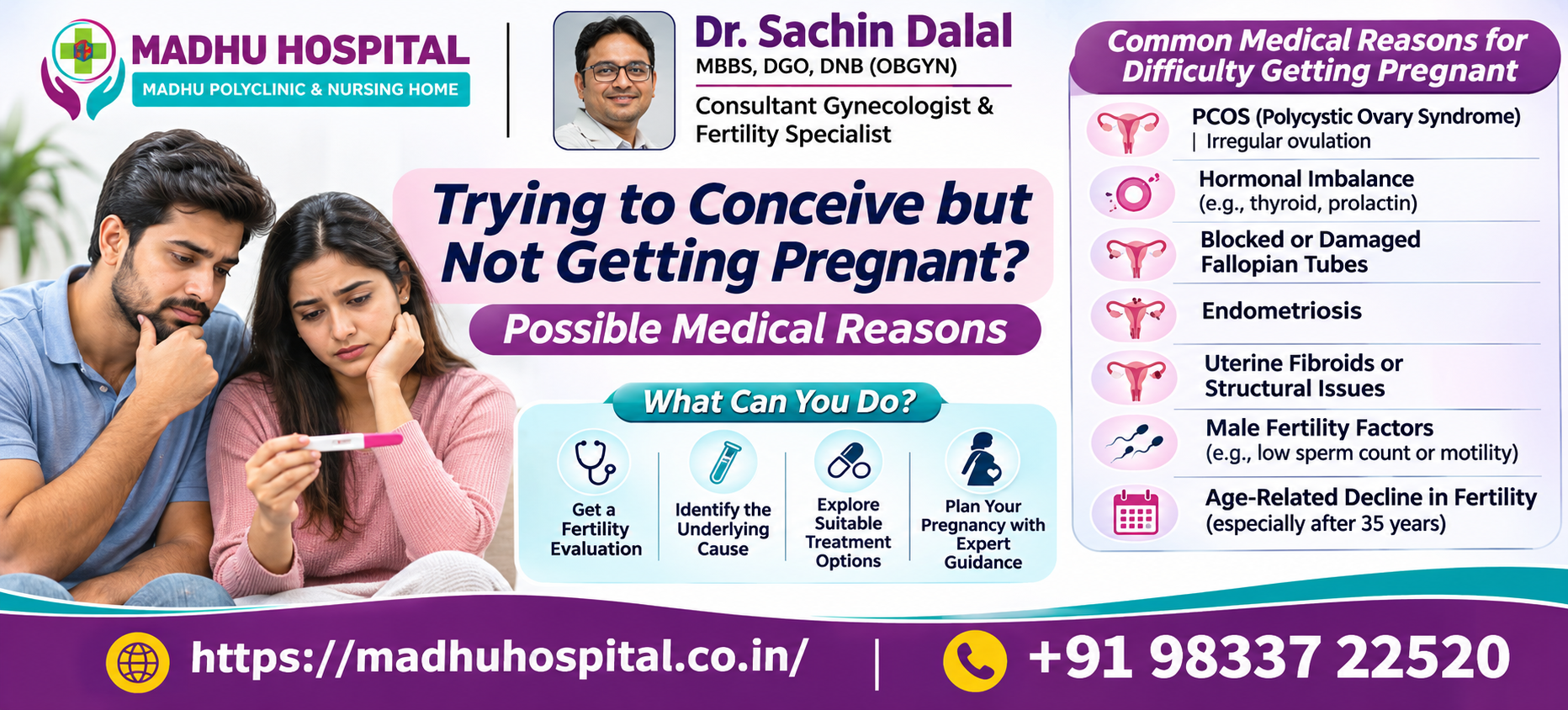
Trying to Conceive but Not Getting Pregnant? Possible Medical Reasons – Dr. Sachin Dalal
Planning to start a family is an exciting journey, but for some couples, getting pregnant may take longer than expected. If you have been trying to conceive without success, you may feel confused, stressed, or concerned about your reproductive health. However, difficulty getting pregnant is a common concern, and several medical and lifestyle factors can affect fertility.
Pregnancy depends on several important processes, including regular ovulation, healthy sperm production, functioning fallopian tubes, successful fertilization, and implantation in the uterus. Medical conditions such as PCOS, hormonal imbalances, blocked fallopian tubes, endometriosis, and age-related fertility changes may contribute to difficulty conceiving.
At Madhu Hospital, patients can seek guidance regarding gynecological and reproductive health concerns. Dr. Sachin Dalal provides gynecology and fertility-related consultation for women and couples experiencing pregnancy planning challenges in Bhandup West, Mumbai.
In this detailed guide, we will explore the possible medical reasons for difficulty getting pregnant, common symptoms, fertility tests, available treatment options, and when to consult a gynecologist or fertility specialist for appropriate medical guidance.
What Is Difficulty Getting Pregnant?
Difficulty getting pregnant refers to challenges achieving pregnancy despite regular, unprotected sexual intercourse over a period of time.
Clinically, infertility is generally evaluated when pregnancy has not occurred after 12 months of regular unprotected intercourse. However, evaluation is recommended sooner in certain situations, particularly when the female partner is 35 or older or when known fertility concerns exist.
Difficulty conceiving does not necessarily mean that pregnancy is impossible. Some causes are treatable, while others may require assisted reproductive care.
Common Signs That May Suggest Fertility Problems
-
Irregular or absent menstrual periods
-
Very painful menstrual cramps
-
Persistent pelvic discomfort
-
Known PCOS or endometriosis
-
Previous pelvic infections or reproductive surgery
-
Repeated difficulty conceiving despite regular attempts
-
Known sperm-related problems in the male partner
Some people with fertility difficulties have no noticeable symptoms, making appropriate medical evaluation important.
1. Common Medical Reasons for Difficulty Getting Pregnant
Several reproductive, hormonal, and general health conditions may contribute to difficulty conceiving.
1. Polycystic Ovary Syndrome (PCOS)
Polycystic Ovary Syndrome is a hormonal condition that can affect ovulation and menstrual regularity.
Women with PCOS may experience irregular menstrual cycles, acne, increased facial or body hair, or changes in weight. When ovulation occurs irregularly or does not occur, opportunities for fertilization may be reduced.
Not everyone with PCOS experiences infertility, and many women with the condition can conceive naturally or with appropriate medical assistance.
Treatment may involve lifestyle measures, ovulation-inducing medication, and management of associated metabolic concerns.
2. Irregular Ovulation or Anovulation
Ovulation is the process in which an ovary releases an egg that may be fertilized by sperm.
When ovulation occurs irregularly or is absent, conception can become more difficult.
Possible causes include PCOS, thyroid disorders, elevated prolactin levels, premature ovarian insufficiency, and other hormonal conditions.
A gynecologist may recommend menstrual cycle assessment, hormone tests, or ultrasound examinations to investigate suspected ovulation problems.
3. Blocked or Damaged Fallopian Tubes
The fallopian tubes play an important role in transporting the egg and allowing fertilization to occur.
If one or both tubes are blocked or damaged, sperm may be unable to reach the egg, or the fertilized egg may not move normally toward the uterus.
Possible causes include previous pelvic infections, pelvic surgery, endometriosis, or adhesions.
Tests such as hysterosalpingography (HSG) or other appropriate investigations may help evaluate tubal patency.
Treatment depends on the location and severity of the problem and may include surgery or assisted reproductive techniques such as IVF.
4. Endometriosis
Endometriosis occurs when tissue similar to the uterine lining grows outside the uterus.
It can cause inflammation, pelvic pain, painful menstruation, and sometimes difficulty conceiving.
Endometriosis may affect fertility through inflammation, adhesions, or changes involving the ovaries and fallopian tubes.
However, some women with endometriosis conceive without fertility treatment.
Management depends on symptoms, age, disease severity, reproductive goals, and other fertility factors.
5. Thyroid and Hormonal Disorders
Hormones help regulate ovulation, menstrual cycles, and reproductive function.
An underactive or overactive thyroid can sometimes interfere with menstrual regularity and ovulation.
Elevated prolactin levels and other endocrine disorders may also affect fertility.
When clinically indicated, blood tests can help identify hormonal abnormalities.
Treating an underlying hormonal condition may improve reproductive function in selected patients.
6. Age-Related Fertility Changes
Female fertility generally declines with age, with the decline becoming more pronounced during the mid-to-late thirties.
This occurs partly because the number and quality of available eggs decrease over time.
Age can also influence the likelihood of miscarriage and certain pregnancy complications.
Although many women conceive successfully after 35, earlier fertility evaluation is recommended when pregnancy has not occurred after six months of trying.
Women over 40 may benefit from more immediate fertility assessment.
7. Male Fertility Factors
Difficulty getting pregnant is not always related to the female reproductive system.
Male fertility factors can include:
-
Low sperm count
-
Reduced sperm motility
-
Abnormal sperm morphology
-
Hormonal disorders
-
Varicocele
-
Reproductive tract obstruction
-
Certain genetic or medical conditions
Semen analysis is commonly included in the initial fertility evaluation.
Because fertility involves both partners, investigating male and female factors together can help avoid unnecessary delays.
8. Uterine Fibroids and Structural Abnormalities
Certain uterine conditions may interfere with implantation or pregnancy.
Submucosal fibroids, uterine polyps, intrauterine adhesions, and some congenital uterine abnormalities may affect fertility depending on their location and severity.
Not all fibroids or structural differences cause infertility.
Pelvic ultrasound and other investigations may be recommended when a structural problem is suspected.
9. Diminished Ovarian Reserve
Ovarian reserve refers to the remaining quantity of eggs in the ovaries.
It generally decreases with age, although the rate varies between individuals.
Tests such as Anti-Müllerian Hormone (AMH) and antral follicle count may help clinicians estimate ovarian response to fertility treatment.
However, these tests cannot reliably predict whether an individual will conceive naturally in the short term.
Ovarian reserve results should therefore be interpreted alongside age, medical history, and other clinical findings.
10. Unexplained Infertility
Sometimes, fertility investigations do not identify a clear medical cause.
This is known as unexplained infertility.
It may be diagnosed when standard assessments of ovulation, sperm parameters, and reproductive anatomy do not reveal a significant abnormality.
Unexplained infertility does not mean that the difficulty is imaginary or that treatment is unavailable.
Management depends on factors such as age, duration of infertility, previous pregnancies, and individual preferences.
2. Lifestyle Factors That May Affect Fertility
Lifestyle habits and general health can also influence reproductive function.
Body Weight and Nutrition
Being significantly underweight or overweight may affect hormonal balance and ovulation in some individuals.
A balanced diet and appropriate weight management can support general reproductive health, although weight alone does not explain every fertility problem.
Smoking and Tobacco Use
Smoking can negatively affect reproductive health in both men and women.
Avoiding tobacco exposure is an important part of preconception care.
Alcohol and Substance Use
Alcohol and recreational substances may affect reproductive health and pregnancy outcomes.
People planning pregnancy should discuss alcohol use and other exposures with their healthcare professional.
Stress and Sleep
Fertility difficulties can cause considerable emotional stress.
Although everyday stress should not automatically be considered the cause of infertility, adequate sleep, emotional support, and stress-management strategies may improve overall well-being.
Physical Activity
Regular moderate physical activity supports general health.
Extremely intense exercise combined with inadequate energy intake can disrupt menstrual function in some individuals.
3. When Should You Consult a Fertility Specialist?
Knowing when to seek medical advice can help identify fertility concerns without unnecessary delays.
| Situation | Recommended Evaluation |
|---|---|
| Female partner younger than 35 | After 12 months of regular unprotected intercourse |
| Female partner aged 35–40 | After 6 months of trying |
| Female partner older than 40 | Consider more immediate evaluation |
| Irregular or absent periods | Seek earlier assessment |
| Known endometriosis or tubal disease | Seek earlier assessment |
| Known male fertility concerns | Seek earlier assessment |
| Previous pelvic surgery or significant reproductive history | Discuss early evaluation |
These are general recommendations. Individual circumstances may require a different approach.
4. Fertility Tests for Couples Experiencing Difficulty Getting Pregnant
A fertility evaluation helps identify possible causes and guide treatment decisions.
Medical History and Physical Examination
The doctor may ask about menstrual cycles, previous pregnancies, medical conditions, medications, surgeries, lifestyle habits, and the duration of attempts to conceive.
Both partners’ medical histories may be relevant.
Ovulation Assessment
Ovulation may be assessed through menstrual history, appropriately timed progesterone testing, or other investigations when indicated.
Women with regular menstrual cycles may not require extensive ovulation testing in every case.
Hormonal Blood Tests
Depending on symptoms and clinical findings, a doctor may recommend tests involving thyroid function, prolactin, or other reproductive hormones.
Pelvic Ultrasound
Ultrasound can help evaluate the uterus, ovaries, fibroids, ovarian cysts, and certain structural conditions.
Fallopian Tube Evaluation
Hysterosalpingography or other suitable tests may be used to assess whether the fallopian tubes are open.
Semen Analysis
Semen analysis evaluates sperm concentration, movement, and other characteristics.
Abnormal results may require repeat testing or further assessment.
Ovarian Reserve Testing
AMH testing and antral follicle count may be used when the results are relevant to treatment planning, especially for assisted reproduction.
Not every patient requires every test. Investigations should be selected according to the clinical situation.
5. Treatment Options for Difficulty Getting Pregnant
Treatment for fertility problems depends on the underlying cause, the woman’s age, the duration of infertility, medical history, and the reproductive health of both partners.
Ovulation Induction
Women who experience irregular or absent ovulation may benefit from medications that stimulate egg development and release. Treatment is selected according to the underlying condition and requires appropriate medical supervision. Ultrasound monitoring may be recommended to assess ovarian response and reduce the risk of complications.
Hormonal Treatment
When thyroid dysfunction, elevated prolactin, or another hormonal disorder contributes to fertility problems, treating the underlying condition may improve reproductive function. Hormonal treatment should be based on appropriate testing and an individualized medical assessment.
Intrauterine Insemination (IUI)
IUI involves placing prepared sperm directly into the uterus around the time of ovulation. It may be considered for selected fertility conditions, depending on sperm quality, fallopian tube function, age, and other factors. Success rates vary, and IUI is not suitable for every patient.
In Vitro Fertilization (IVF)
IVF is an assisted reproductive technique in which eggs are retrieved and fertilized with sperm in a laboratory. An embryo may then be transferred into the uterus. IVF may be recommended for certain tubal conditions, significant male fertility problems, or other situations where simpler approaches are unlikely to succeed.
Surgical Treatment
Some reproductive conditions, including selected uterine polyps, fibroids, adhesions, or tubal abnormalities, may require surgical evaluation or treatment. Surgery is not necessary for every fertility problem, and its potential benefits and risks should be discussed with a specialist.
6. Tips to Improve Your Chances of Getting Pregnant
Although not all fertility problems can be prevented, healthy habits and appropriate pregnancy planning may support reproductive health.
-
Understand Your Fertile Window: The days leading up to ovulation are particularly important for conception. Tracking menstrual cycles may help identify fertile days.
-
Maintain Regular Intercourse: Having intercourse every one to two days during the fertile window can help maximize the chances of pregnancy.
-
Follow a Balanced Diet: Include vegetables, fruits, whole grains, protein, and essential nutrients in your meals.
-
Take Folic Acid: People planning pregnancy are generally advised to take 400 micrograms of folic acid daily, unless their clinician recommends a different dose.
-
Avoid Smoking and Alcohol: Avoid tobacco and discuss alcohol consumption with your healthcare professional when planning pregnancy.
-
Maintain Physical Activity: Regular moderate exercise supports general health and well-being.
-
Manage Existing Medical Conditions: Diabetes, thyroid disorders, and other conditions should be reviewed before pregnancy.
-
Avoid Unnecessary Fertility Supplements: Supplements and medications marketed for fertility should not replace medical evaluation.
These measures may support overall reproductive health, but they cannot correct every underlying cause of infertility.
ASRM+1
7. Why Consult Dr. Sachin Dalal for Fertility Concerns in Bhandup?
When you are experiencing difficulty getting pregnant, professional medical guidance can help identify possible reproductive health concerns and determine appropriate next steps.
Dr. Sachin Dalal provides gynecology and fertility-related consultation in Bhandup West, Mumbai.
Individualized Fertility Evaluation
A medical consultation helps review menstrual patterns, reproductive history, previous pregnancies, existing medical conditions, and potential fertility concerns. This information can guide the selection of appropriate investigations.
Assessment of Possible Medical Causes
Fertility difficulties may involve ovulation disorders, hormonal conditions, tubal abnormalities, uterine problems, or male reproductive factors. A structured evaluation helps identify which factors require further investigation.
Guidance on Treatment Options
Depending on the diagnosis, patients may receive guidance about lifestyle changes, medication, fertility treatment options, or referral for specialized reproductive care.
Pregnancy Planning and Reproductive Health Guidance
Preconception consultation can help patients understand fertile timing, nutritional requirements, existing medical conditions, and important considerations before pregnancy.
Conclusion: Understanding the Causes of Difficulty Getting Pregnant
Experiencing difficulty getting pregnant can be emotionally challenging, but it is important to understand that fertility problems may have several possible medical causes.
Conditions such as PCOS, irregular ovulation, blocked fallopian tubes, endometriosis, hormonal imbalances, age-related fertility changes, and male reproductive factors can influence conception.
Identifying the underlying cause through appropriate medical evaluation can help patients understand their treatment options and make informed decisions.
If you have been trying to conceive without success, consulting a qualified healthcare professional may help you determine the next steps.
Dr. Sachin Dalal provides gynecology and fertility-related consultation in Bhandup West, Mumbai, for individuals and couples seeking reproductive health guidance.
Book a Consultation with Dr. Sachin Dalal
Dr. Sachin Dalal – Gynecology & Fertility Care
9833722520 / 7208744160
Difficulty Getting Pregnant Difficulty Getting Pregnant Difficulty Getting Pregnant Difficulty Getting Pregnant Difficulty Getting Pregnant Difficulty Getting Pregnant Difficulty Getting Pregnant Difficulty Getting Pregnant Difficulty Getting Pregnant Difficulty Getting Pregnant Difficulty Getting Pregnant Difficulty Getting Pregnant Difficulty Getting Pregnant Difficulty Getting Pregnant Difficulty Getting Pregnant Difficulty Getting Pregnant Difficulty Getting Pregnant Difficulty Getting Pregnant Difficulty Getting Pregnant Difficulty Getting Pregnant